
Do you wonder why Bitcoin’s price can stay almost flat while traders talk about “open interest” and “funding rates”? This article explains what Bitcoin futures are, how open interest and funding work, and why these metrics matter for anyone trying to earn from crypto markets.
What Bitcoin futures are and how they work
Bitcoin futures are contracts that let you agree to buy or sell Bitcoin at a set price on a future date. Unlike buying the coin itself, a futures contract does not require you to own Bitcoin; it is a derivative that derives its value from the underlying asset. When you open a futures position, you either go long (betting the price will rise) or short (betting it will fall). Most crypto exchanges offer perpetual futures, which have no expiration date and are kept in line with the spot price through a mechanism called the funding rate.
The funding rate is a periodic payment exchanged between long and short traders. If the rate is positive, longs pay shorts; if it is negative, shorts pay longs. This payment prevents the futures price from drifting too far from the spot price. Funding rates therefore act as a real‑time indicator of market sentiment: a high positive rate suggests bullish pressure (more longs than shorts), while a negative rate signals bearish pressure.
Open interest, volume, and liquidations explained
Open interest (OI) is the total number of outstanding futures contracts that have not been settled. An increase in OI means new money is entering the market, while a decrease indicates contracts are being closed. Trading volume measures how many contracts change hands in a given period; high volume often accompanies strong price moves. Liquidations occur when a trader’s margin falls below the required level, forcing the exchange to close the position. Large liquidation events can cause rapid price swings.
Because futures are leveraged—traders can control a large position with a relatively small amount of capital—these metrics are especially important for risk‑aware participants. They help you gauge whether a price move is supported by genuine capital inflow or is merely a short‑term swing.
Real‑world illustration: Bitcoin in late October 2026
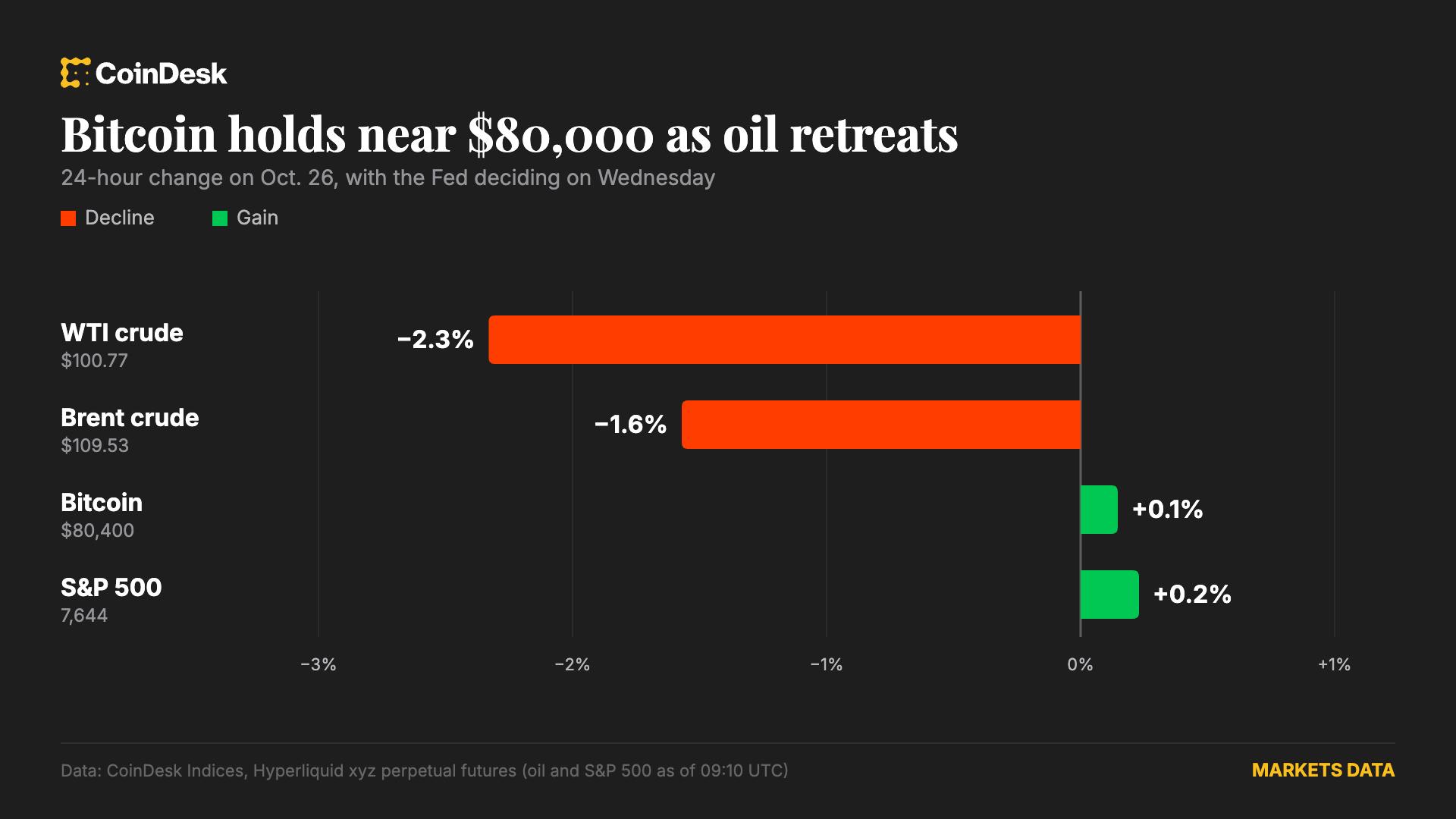
In late October 2026, Bitcoin hovered around $80,400. The market data showed that open interest rose 0.84% to about $139.9 billion, while trading volume fell 7.21%. Funding rates across major contracts were mildly positive, and the long/short taker volume ratio was almost even at 50.34% to 49.66%, indicating no strong bias toward either side. Liquidations dropped dramatically by 71% to $153 million, suggesting that fewer traders were being forced out of positions.
These numbers illustrate a market in a “quiet” state: a modest inflow of new contracts (OI up) but declining activity (volume down) and low pressure on either side (balanced taker ratio and mild funding). For a small miner or a passive‑income seeker, such a scenario often means that leveraged trading opportunities are limited and that the price may remain range‑bound for the near term.
What this means for you
If you are looking to earn online through crypto, understanding futures metrics can help you decide whether to:
- Enter a leveraged position—only when funding rates are favorable and open interest is rising, indicating fresh capital.
- Provide liquidity to a futures market—some platforms reward liquidity providers with a share of the funding payments.
- Focus on spot or mining earnings—when futures markets show low activity, spot price movements tend to be driven more by supply‑demand fundamentals than by speculative leverage.
In the October 2026 snapshot, the modest funding and balanced long/short split suggested that neither bulls nor bears were willing to pay a premium for leverage. For a cautious participant, this could be a signal to stay on the sidelines of futures trading and concentrate on more stable earning methods, such as staking or cloud mining.
How to evaluate futures markets before committing capital
- Check the funding rate. Positive rates mean longs are paying shorts; assess whether you want to be on the paying or receiving side.
- Look at open interest trends. A rising OI signals new money entering the market; a falling OI may indicate waning interest.
- Monitor volume and liquidations. High volume with low liquidation suggests healthy trading; spikes in liquidations can precede sharp price moves.
- Compare the long/short taker ratio. A skewed ratio (e.g., 60% longs) can reveal a dominant sentiment, but also a potential over‑extension.
- Assess the market’s skew. The difference between put and call pricing (skew) shows whether traders are paying more for downside protection (puts) or upside bets (calls).
FAQ
What is the difference between perpetual futures and traditional futures?
Traditional futures have a set expiration date; perpetual futures do not. Instead, they use funding payments to keep the contract price aligned with the spot price.
Can I earn passive income from funding rates?
Yes, if you hold a position on the side that receives funding (e.g., being short when the rate is negative). However, the payments are usually small and can be offset by price risk, so they are not a guaranteed income stream.
Why does open interest matter more than price alone?
Open interest shows how much capital is still engaged in the market. A price move with rising OI suggests strong conviction, while the same move with falling OI may be a short‑lived spike.
Is high leverage always risky?
Higher leverage magnifies both gains and losses. If funding rates are extreme or liquidations are frequent, the risk of rapid loss increases dramatically.
This article references reporting from coindesk.com.





