Are you wondering why the value of Bitcoin matters to the amount of money you can earn from mining? This article explains the relationship between Bitcoin’s market price, mining rewards, and what that means for anyone looking to generate passive income through crypto mining.
What mining profitability really is
Bitcoin mining is the process of using computer hardware to solve complex mathematical puzzles. When a miner (or a mining pool) finds a valid solution, the network adds a new block to the blockchain and the miner receives a reward. The reward consists of two parts: a fixed “block subsidy” of newly minted bitcoins and any transaction fees included in that block.
The block subsidy is currently 6.25 BTC and is cut in half roughly every four years in an event called the “halving.” Transaction fees vary with network activity. Both components are paid in Bitcoin, so the dollar value of the reward depends directly on Bitcoin’s market price at the time the block is mined.
Mining profitability is calculated by subtracting the costs of running the hardware—primarily electricity and equipment depreciation—from the revenue earned in fiat terms. The basic formula looks like this:
Profit = (BTC earned per day × Bitcoin price) – (electricity cost per day + other operating costs)
Because the amount of BTC earned per day is relatively stable for a given hash rate, changes in Bitcoin’s price are the main driver of short‑term profit swings.
Real‑world illustration
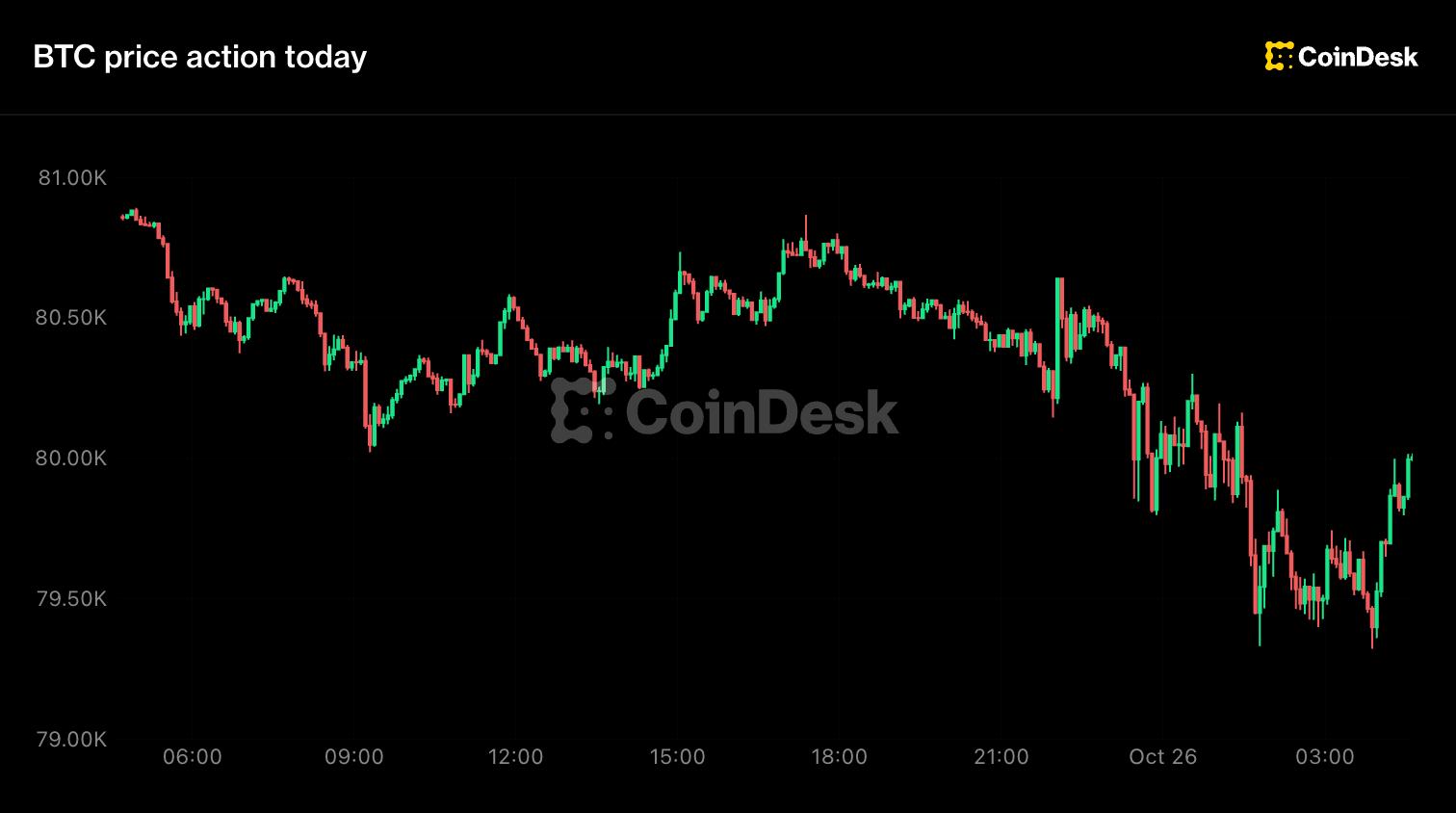
In March 2026, Bitcoin slipped below the $80,000 mark as traders reduced exposure ahead of a Federal Reserve meeting. The price drop meant that miners who were previously earning roughly $500 USD per day in rewards suddenly saw that figure fall to about $460 USD, assuming their hash rate and electricity costs stayed the same. The reduced revenue forced some small miners to pause operations or look for cheaper energy sources.
What this means for you
If you are considering mining as a source of passive income, you need to understand that your earnings will fluctuate with Bitcoin’s market price. A strong bull market can turn a marginally profitable operation into a lucrative one, while a bear market can erode margins quickly. This volatility is why many miners monitor price trends and adjust their strategies—such as switching to more efficient hardware, relocating to regions with cheaper electricity, or temporarily shutting down rigs during prolonged downturns.
What to check before you start mining
- Electricity cost per kilowatt‑hour (kWh): This is usually the largest expense. Aim for rates below $0.10 USD/kWh for a reasonable chance of profitability at current Bitcoin prices.
- Hardware efficiency: Measured in joules per terahash (J/TH). More efficient ASICs reduce the electricity needed for each unit of hash power.
- Break‑even Bitcoin price: Calculate the price at which your revenue equals your total costs. Use online calculators and input your specific electricity rate and hardware specs.
- Pool fees and payout structure: Mining pools charge a small percentage (often 1 %–2 %) of rewards. Choose a reputable pool with transparent fees.
- Regulatory environment: Ensure that mining is permitted in your jurisdiction and that you understand any tax obligations.
FAQ
Will a higher Bitcoin price always increase my profits?
Yes, a higher price raises the fiat value of each mined bitcoin, but only if your operating costs remain constant. Sudden spikes in electricity rates or hardware failures can offset the benefit.
Can I mine profitably when Bitcoin is below $50,000?
It is possible with ultra‑efficient hardware and very low electricity costs (often below $0.05 USD/kWh). Most small‑scale miners find it challenging at those price levels.
Is it better to mine directly or use a cloud‑mining service?
Cloud mining removes the need to manage hardware but often comes with higher fees and less transparency. Direct mining gives you control over equipment and energy sourcing, which can improve margins if you can secure cheap power.
How often should I recalculate my break‑even price?
Revisit the calculation whenever there is a significant change in Bitcoin’s price, electricity rates, or when you upgrade hardware. A quarterly review is a good baseline.
This article references reporting from coindesk.com.