
Are you curious why a single event can wipe out billions in crypto futures positions? This article explains how futures liquidations happen, why they matter for anyone earning online, and what you can do to protect yourself.
The plain explanation
A futures contract is an agreement to buy or sell an asset at a predetermined price on a future date. In crypto, these contracts let traders bet on the price of Bitcoin, Ether, or other coins without actually owning them. Because the price can move dramatically, exchanges require traders to post margin—a small amount of capital that acts as collateral.
If the market moves against a trader’s position enough that the remaining margin no longer covers the potential loss, the exchange will automatically close the position. This forced closure is called a liquidation. The goal is to prevent the trader’s loss from exceeding the collateral and to protect the exchange’s overall solvency.
Liquidations happen in two main ways:
- Partial liquidation: Only part of the position is closed to bring the margin back to a safe level.
- Full liquidation: The entire position is closed, often at a price worse than the trader’s entry point, resulting in a realized loss.
Exchanges use a maintenance margin level—typically a few percent of the contract’s notional value—to decide when to trigger liquidations. If the trader’s equity falls below this threshold, the system steps in.
Because futures are leveraged, a small price move can generate a large loss relative to the initial margin. For example, with 10× leverage, a 10 % adverse move wipes out the trader’s entire margin. This amplification is why liquidations can cascade: one large price swing can push many leveraged positions into the danger zone at once, causing a wave of forced closures.
A real example
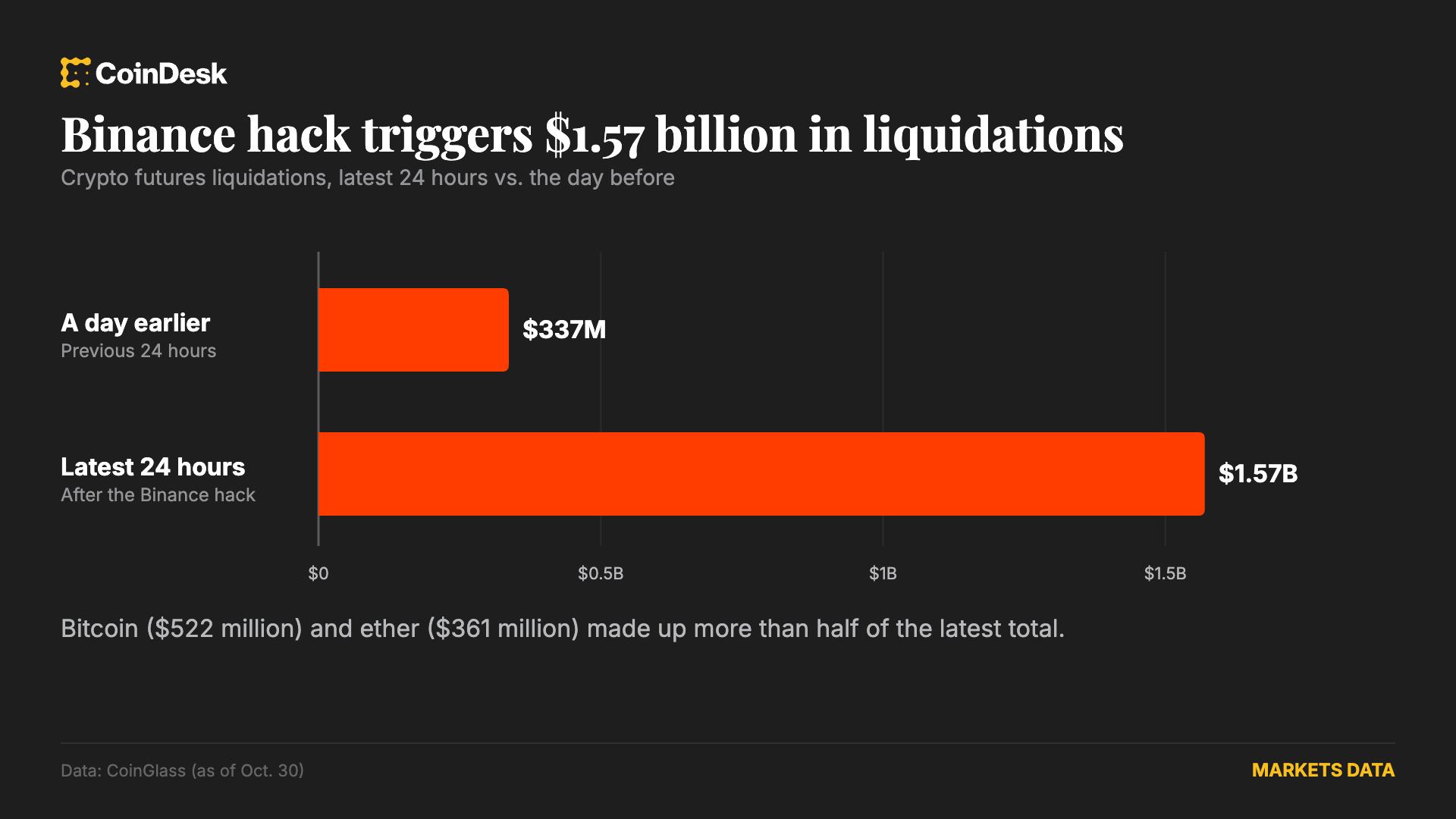
In March 2026, a major security breach at Binance resulted in the theft of billions of dollars worth of Bitcoin and Ether. The sudden loss of assets caused the price of Bitcoin to dip to around $77,350. At the same time, crypto futures markets saw liquidations total $1.57 billion. The hack triggered a rapid price decline, pushing many leveraged traders below their maintenance margin and forcing exchanges to close their positions en masse.
What it means for you
If you earn passive income through crypto futures—whether by providing liquidity, using automated trading bots, or simply holding leveraged positions—you are exposed to liquidation risk. A sharp market move, even if unrelated to your own strategy, can erase your margin and any unrealized gains.
Understanding liquidation mechanics helps you gauge how much capital you can safely allocate to leveraged activities. It also highlights the importance of risk controls such as stop‑loss orders, lower leverage, and diversified exposure.
What to check / how to judge
- Leverage level: The higher the leverage, the closer you are to the liquidation threshold. Beginners should start with 2× or 3×.
- Maintenance margin requirement: Review the exchange’s margin rules. A higher maintenance margin gives you a larger safety buffer.
- Liquidity of the contract: Thinly traded futures can experience larger price slippage during liquidations, worsening outcomes.
- Risk management tools: Ensure the platform offers stop‑loss or take‑profit orders, and consider using them to cap potential losses.
- Portfolio allocation: Keep only a modest portion of your total crypto holdings in leveraged positions. The rest can stay in lower‑risk assets or stablecoins.
FAQ
What triggers a liquidation?
A liquidation occurs when your account equity falls below the exchange’s maintenance margin requirement, meaning the collateral no longer covers the potential loss of your open futures contracts.
Can I avoid liquidations altogether?
While you cannot eliminate the risk, you can reduce it by using low leverage, setting stop‑loss orders, and maintaining a comfortable margin buffer above the maintenance level.
Do liquidations affect my other crypto holdings?
If your margin is held in the same wallet as other assets, a liquidation can reduce the overall balance, potentially forcing you to sell other holdings to meet margin calls. Keeping margin separate can limit this spillover.
Are futures liquidations a sign of a market crash?
Large liquidation volumes often coincide with rapid price moves, but they are a symptom rather than a cause. They indicate that many traders were highly leveraged when the market shifted.
This article references reporting from coindesk.com.





