Wondering why a stolen cryptocurrency can disappear from an exchange but still linger on the blockchain, and what steps you can actually take to safeguard your holdings? This article breaks down the mechanics of crypto theft, the limits of blockchain immutability, and practical measures you can adopt to reduce risk.
What a crypto theft actually looks like
When a hacker gains access to a wallet—whether it’s a personal private key, a hot wallet on an exchange, or a custodial account—they can initiate a transaction that moves the assets to a new address they control. Because most blockchains are decentralized ledgers, every transaction is recorded permanently and cannot be altered or deleted. This property, called immutability, means that once the funds leave the original address, the blockchain itself offers no built‑in way to reverse the transfer.
However, not all crypto sits directly on a public ledger. Many users keep their coins on custodial platforms—exchanges, payment processors, or centralized services—that hold the private keys on their behalf. These platforms can intervene by freezing or blacklisting the destination address, effectively preventing the stolen funds from being moved further or withdrawn to fiat.
Real‑world illustration
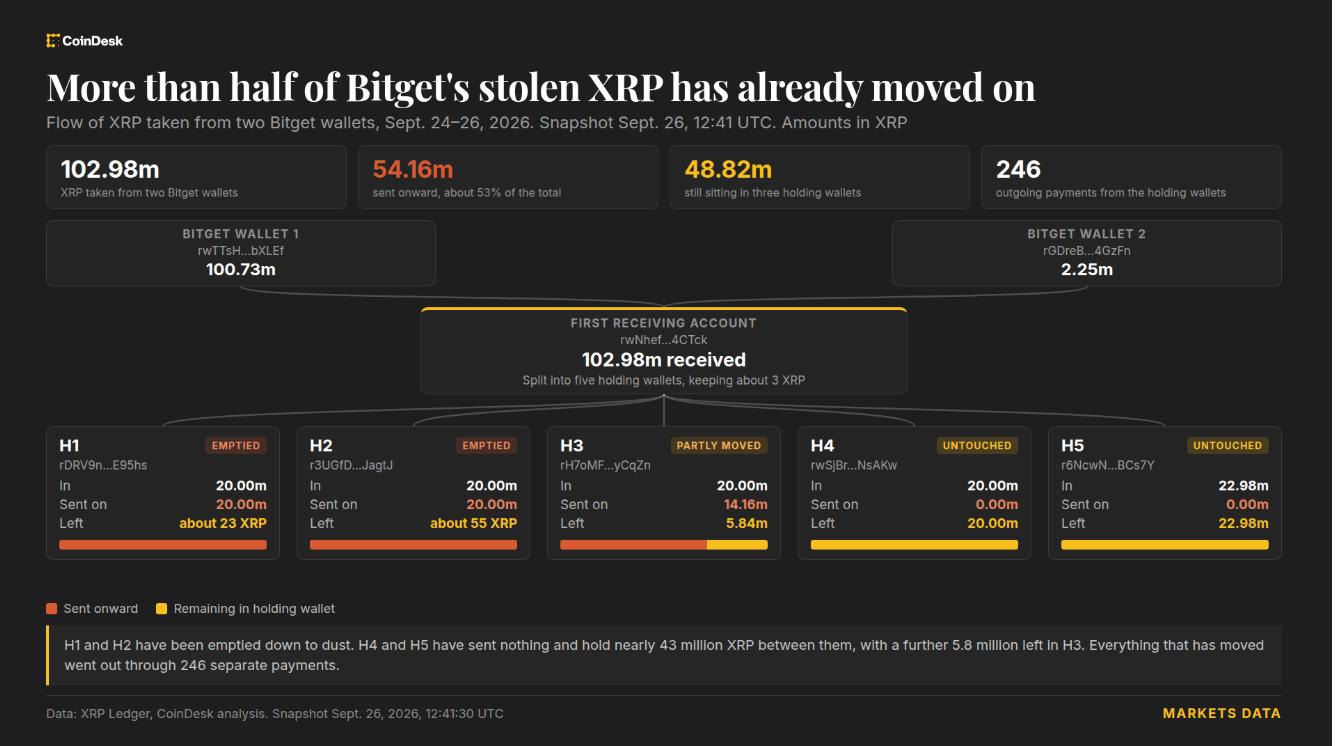
In March 2026, a hacker breached the Bitget exchange and transferred roughly $83 million worth of XRP to a new wallet. Because XRP is a token on the XRP Ledger, the transaction was recorded instantly and could not be undone on the ledger itself. Nevertheless, two major stablecoin issuers—Circle and Tether—cooperated with authorities and used their custodial control to freeze the hacker’s wallet, halting further withdrawals. This shows the split between blockchain immutability and the ability of custodial services to intervene.
What this means for you
If you store crypto on an exchange or a custodial wallet, you rely on that provider’s security practices and their willingness to cooperate with law enforcement. A successful hack can still result in loss, but the provider may be able to block the stolen funds from leaving the platform, giving you a chance to recover some value.
If you hold assets in a non‑custodial wallet—where you control the private keys—the only protection you have is the strength of your own security measures. Once a private key is compromised, the blockchain will honor any transaction the attacker initiates, and there is no central authority to reverse it.
How to evaluate the safety of a platform
- Custodial vs. non‑custodial: Know whether the service holds your private keys. Custodial services can freeze accounts, but they also become a single point of failure.
- Security audits: Look for independent security audits of the platform’s code and infrastructure.
- Insurance or compensation policies: Some exchanges offer partial insurance for digital asset loss; understand the terms.
- Regulatory compliance: Providers that work with regulators are more likely to have processes for freezing illicit wallets.
- Two‑factor authentication (2FA) and hardware security modules (HSM):** Strong authentication reduces the chance of unauthorized access.
Quick FAQ
Can a blockchain transaction ever be reversed?
No. Once a transaction is confirmed on a public ledger, it is immutable. Only custodial services that control the destination address can intervene by freezing or blacklisting it.
What should I do if I suspect my exchange account was compromised?
Immediately contact the exchange’s support, enable all available security features (e.g., 2FA, withdrawal whitelist), and consider moving any remaining funds to a secure, non‑custodial wallet.
Is using a hardware wallet enough to prevent theft?
A hardware wallet protects your private keys from online attacks, but physical theft or loss of the device can still expose your assets. Always back up the recovery seed in a safe location.
Do “freeze” actions by companies like Circle or Tether guarantee I’ll get my money back?
Freezing stops further movement of the stolen funds, but recovery depends on the platform’s policies, legal proceedings, and whether the assets can be returned to the original owner. It is not a guarantee of full restitution.
This article references reporting from coindesk.com.