
Are you curious why crypto prices sometimes plunge sharply and wonder what “liquidations” mean for traders? This article explains the mechanics of leveraged trading, how liquidations are triggered, and what the risks mean for anyone looking to earn online through crypto markets.
What leveraged trading actually is
Leveraged trading lets a trader open a position that is larger than the amount of capital they actually have. The trader borrows the extra funds from a platform or from other market participants. The ratio of borrowed funds to the trader’s own capital is called the leverage. For example, 10× leverage means a trader can control $10,000 worth of Bitcoin with only $1,000 of their own money.
Two main types of positions exist:
- Long – betting that the price will rise.
- Short – betting that the price will fall.
Because the trader is using borrowed money, the potential profit is multiplied by the leverage factor, but the potential loss is also multiplied. If the market moves against the trader, the platform must protect itself from losing the borrowed funds.
How liquidations work
A liquidation occurs when a leveraged position loses enough value that the trader’s remaining equity can no longer cover the borrowed amount plus any required safety margin. At that point, the exchange automatically closes the position to prevent further loss. This is called a “forced liquidation.”
Exchanges set a maintenance margin – the minimum equity a trader must maintain. If the equity falls below this threshold, the platform initiates a liquidation. The process is instantaneous: the exchange sells (or buys back) the position at the current market price, often at a discount to the trader’s original entry price.
Real‑world illustration
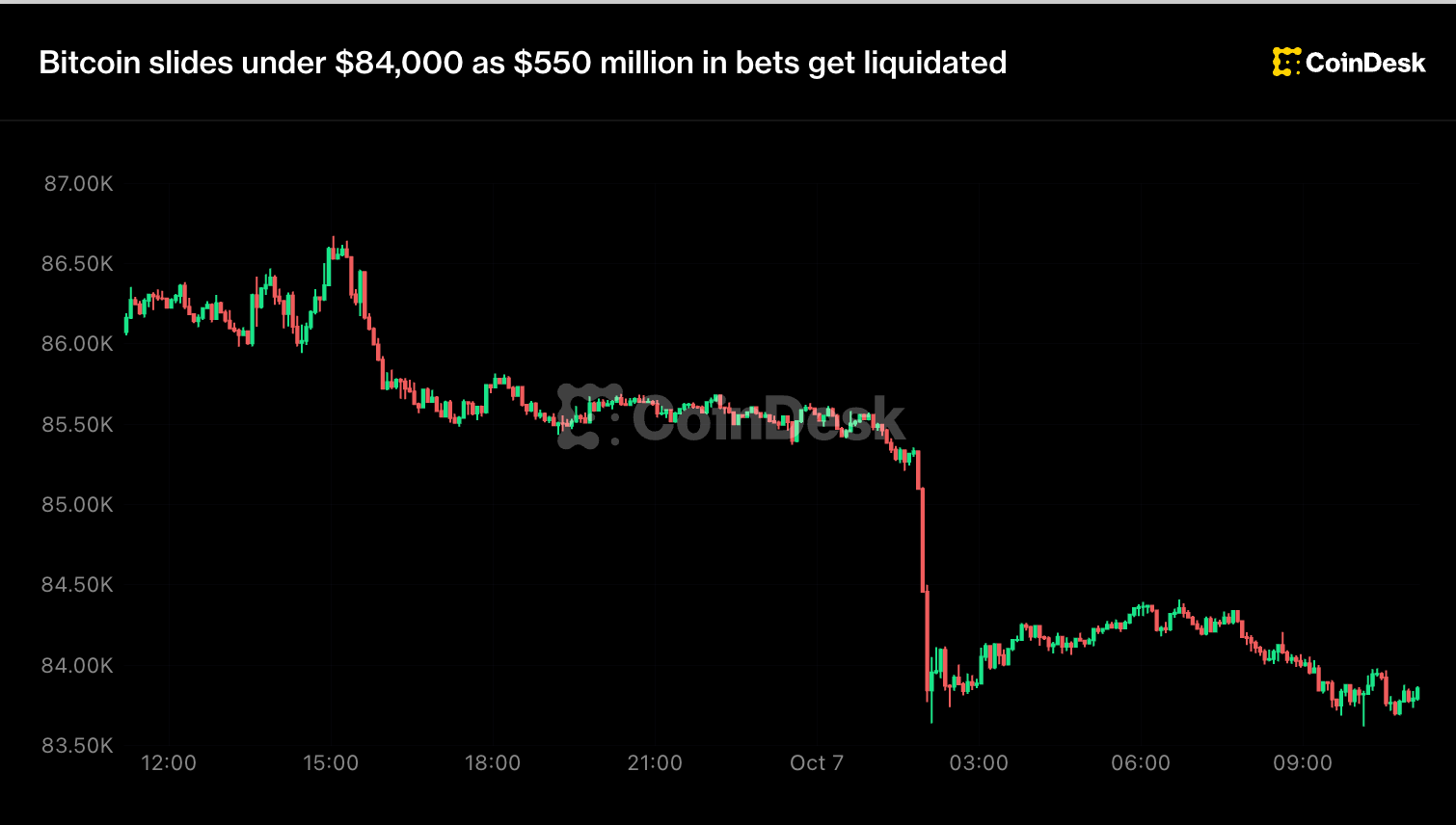
On a Wednesday in March 2026, Bitcoin slipped below $84,000, triggering about $550 million in leveraged crypto liquidations over a 24‑hour period, according to market data. Most of those liquidations hit long positions—traders who had bet on higher prices. At the same time, Ether fell nearly 4% to around $2,590, and other major coins also dropped. Analysts described the move as a “leverage flush,” meaning that many leveraged bets were forced out of the market rather than a sustained downtrend.
What this means for you
If you are considering leveraged trading as a way to earn passive income, understand that the upside comes with a proportional downside. A modest price move against you can wipe out your entire margin, and you may lose more than your initial deposit if the platform allows negative balances.
Even if you are not actively trading, large‑scale liquidations can affect the broader market. When many positions are forced to close at once, the sudden buying or selling pressure can amplify price swings, creating a more volatile environment for all participants.
What to check before using leverage
- Maintenance margin requirements: Know the exact percentage your platform requires to keep a position open.
- Liquidation price calculator: Most exchanges provide tools that show at what price your position will be liquidated given your leverage and entry price.
- Risk controls: Use stop‑loss orders or set manual alerts to exit a trade before the platform does.
- Platform reputation: Choose exchanges with transparent liquidation policies and sufficient liquidity to avoid excessive slippage.
- Leverage size: Lower leverage (e.g., 2× or 3×) reduces the chance of rapid liquidation while still offering amplified returns.
FAQ
What is the difference between margin and leverage?
Margin is the amount of your own capital you must put up to open a leveraged position. Leverage is the multiple of exposure you get relative to that margin. For instance, $1,000 margin with 10× leverage gives you $10,000 exposure.
Can I lose more than I deposit?
Yes, if the exchange allows negative balances. Some platforms automatically close positions before the loss exceeds the margin, while others may let the deficit carry over. Always check the platform’s policy.
Do liquidations affect the price of the underlying coin?
When many positions are liquidated simultaneously, the forced buying or selling can add pressure to the market, potentially accelerating price moves in the direction of the liquidation.
Is leveraged trading suitable for long‑term passive income?
Because leverage magnifies both gains and losses, it is generally considered a high‑risk strategy. Most passive‑income approaches, such as staking or cloud mining, involve lower volatility and more predictable returns.
This article references reporting from coindesk.com.





