
Ever wonder why a sudden dip in the stock market seems to pull down Bitcoin or other digital assets at the same time? This article explains the relationship between traditional market trends and cryptocurrency price swings, and what that means for anyone trying to earn online.
What the connection really is
Cryptocurrencies, like Bitcoin, are traded on global exchanges just like stocks, bonds, and commodities. Because they share many of the same participants—retail investors, institutional funds, and algorithmic traders—their prices often move in step with broader market sentiment. When confidence in risk‑on assets (such as tech stocks) wanes, investors may sell off holdings across the board, including crypto, to raise cash or reduce exposure. This is known as a correlation effect.
Two key forces drive the correlation:
- Liquidity flow. Large investors move money between asset classes quickly. If a major fund decides to shift from equities to cash, it often sells crypto alongside stocks, creating simultaneous price drops.
- Risk perception. Crypto is generally viewed as a high‑risk, high‑reward asset. In periods of market stress—such as economic data releases, geopolitical events, or election cycles—risk‑averse behavior spreads, and crypto prices tend to follow the same direction as risk‑sensitive equities.
It’s important to note that the correlation is not constant. During bullish phases, crypto can decouple and outperform stocks, while in bearish periods the link tightens. Understanding when the two move together helps you manage expectations and risk.
Real‑world illustration
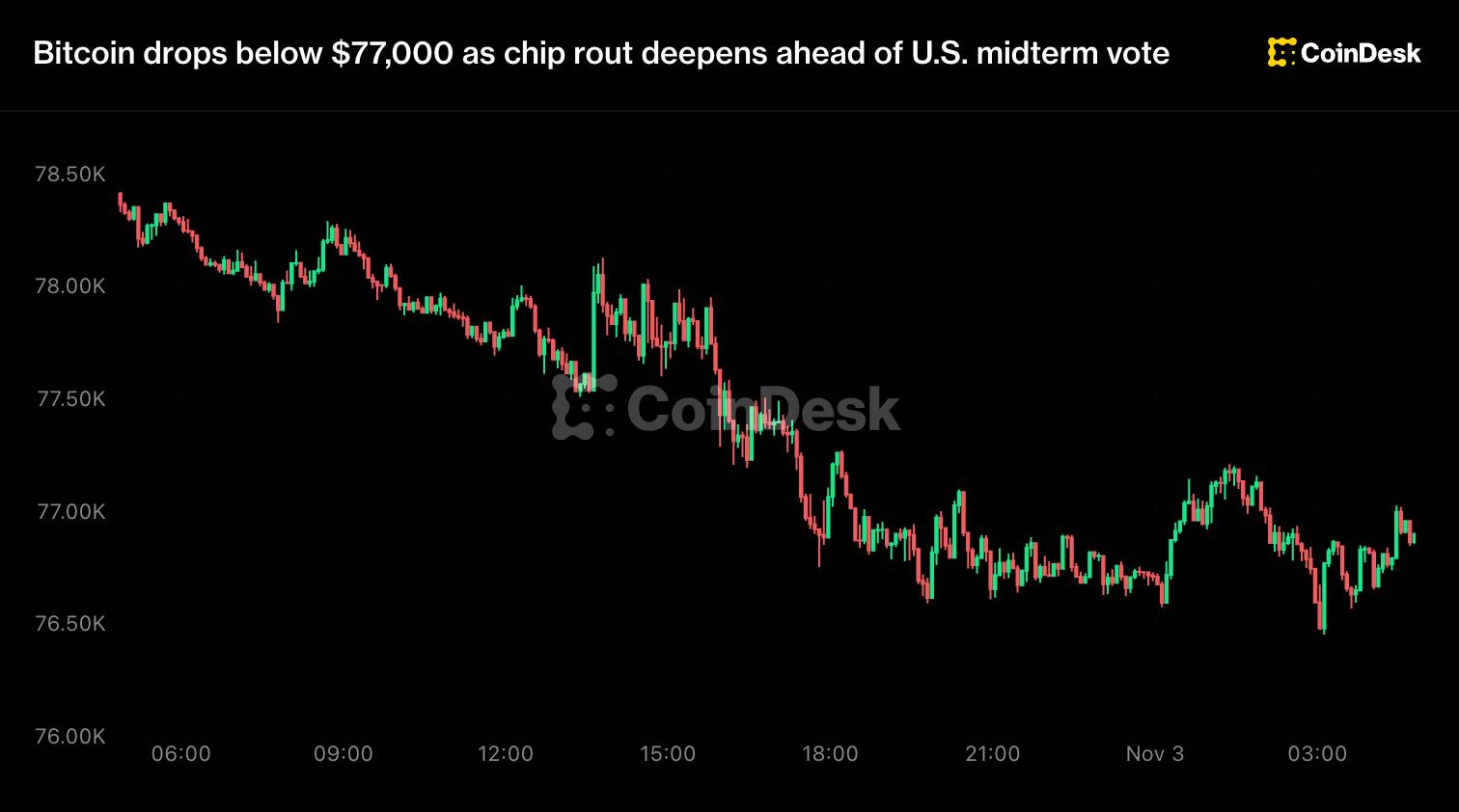
In March 2026, Bitcoin fell below $77,000 after a sharp decline in semiconductor chip stocks deepened ahead of the U.S. midterm elections. At the same time, Zcash (ZEC) dropped nearly 10% and Binance Coin (BNB) slipped under $700 as the Nasdaq‑100 entered a correction, pulling Asian equity markets lower. The simultaneous moves across these unrelated assets highlighted how macro‑level market stress can ripple through the crypto space.
What this means for you
If you earn passive income through staking, mining, or cloud reward platforms, market correlation can affect the value of the rewards you receive. Even if the number of tokens you earn stays the same, a market downturn can reduce their fiat‑denominated purchasing power. Conversely, a strong equity rally can lift crypto prices and boost the real‑world value of your earnings.
Being aware of this link lets you plan for volatility. For example, you might choose to convert a portion of earned tokens into a stablecoin or fiat during a market dip, preserving value until prices recover.
How to evaluate the risk
- Track the correlation coefficient between major crypto pairs (e.g., BTC/USD) and equity indices like the S&P 500 or Nasdaq‑100. A coefficient above 0.5 suggests a strong link.
- Monitor macro‑economic calendars for events that typically trigger risk‑off sentiment—central bank announcements, elections, or major earnings reports.
- Check the liquidity of the platforms you use. Higher liquidity means price swings are less likely to be caused by a single large order.
- Consider diversifying your earning sources across different crypto projects and even into non‑crypto assets to smooth out earnings.
FAQ
Why does Bitcoin sometimes move opposite to the stock market?
During periods of extreme optimism, investors may allocate more capital to riskier assets like crypto, causing it to rise while equities lag. This “decoupling” is temporary and usually ends when broader market sentiment shifts.
Can I protect my earnings from market correlation?
One common method is to convert a portion of earned tokens into stablecoins, which are pegged to fiat currencies and less sensitive to market swings. Holding some earnings in cash or low‑volatility assets also adds a buffer.
Do all cryptocurrencies follow the same pattern?
Not exactly. Larger, more established coins such as Bitcoin and Ethereum tend to correlate more closely with equities, while smaller or niche tokens may exhibit weaker or even opposite movements, depending on their use case and community dynamics.
Is correlation a sign that crypto is “just another asset class”?
Correlation shows that crypto shares some market dynamics with traditional assets, but it also retains unique drivers—like network upgrades, on‑chain activity, and regulatory news—that can cause independent price movements.
This article references reporting from coindesk.com.





