
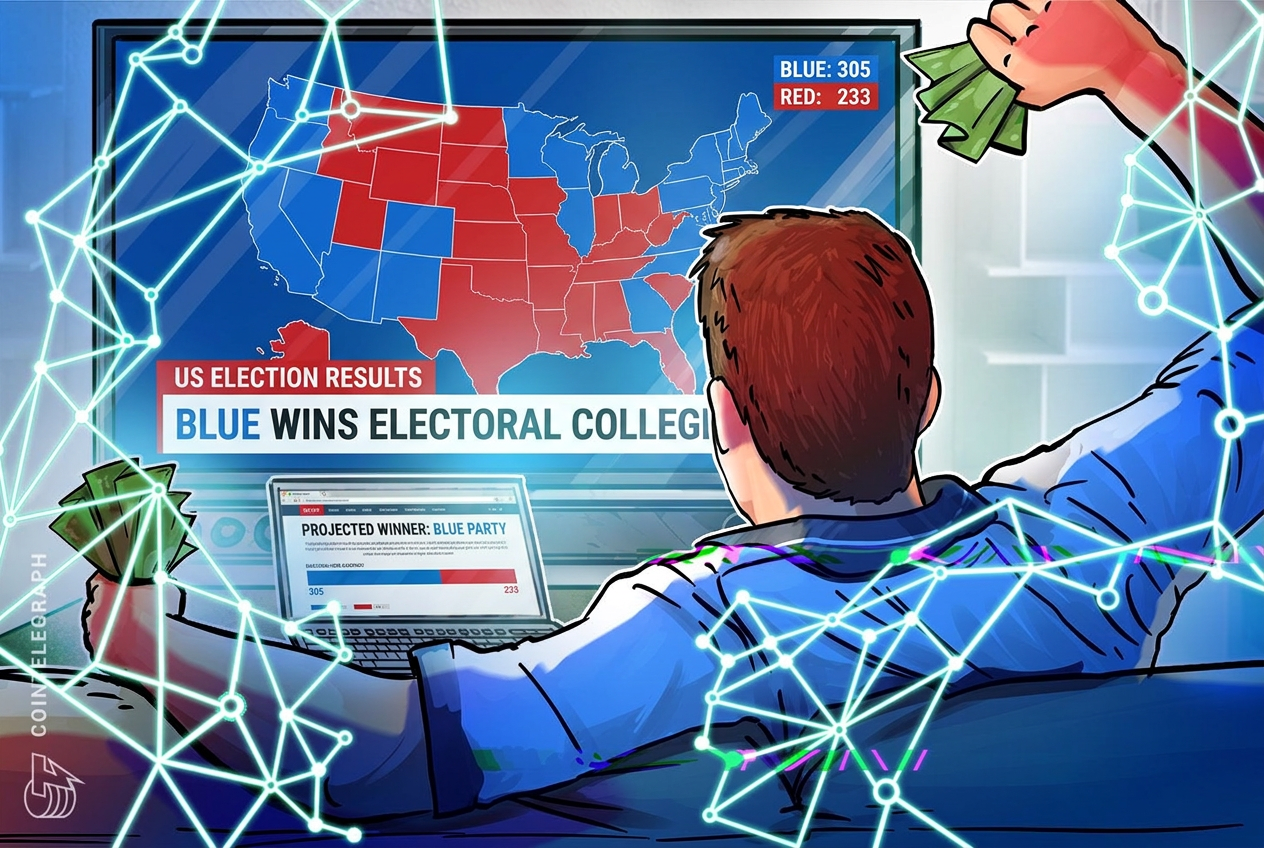
Ever wondered how people can bet on political outcomes and why some lawmakers want to ban that practice? This article explains what prediction markets are, how they operate, and what recent legislative efforts mean for anyone considering them as a way to earn online.
What a Prediction Market Is
A prediction market is an online platform where participants buy and sell contracts that pay out based on the outcome of a future event. Each contract represents a specific question, such as “Will Candidate X win the election?” If the event occurs, the contract settles at a predefined value (usually $1); if it does not, the contract settles at $0. Prices of these contracts fluctuate as traders incorporate new information, effectively turning the market into a crowd‑sourced forecast.
The price of a contract can be interpreted as the market’s implied probability of the event happening. For example, a contract trading at $0.65 suggests a 65 % chance of the outcome. Traders profit by buying low and selling high, or by holding a contract to settlement if their prediction is correct.
Key terms:
- Contract – a binary security that pays $1 if the specified event occurs, otherwise $0.
- Implied probability – the contract price expressed as a percentage.
- Liquidity – the amount of money available for buying and selling contracts, which affects how easily you can enter or exit a position.
- Spread – the difference between the best buy (bid) and sell (ask) prices, representing a cost to traders.
How Prediction Markets Operate
Platforms such as Kalshi and Polymarket act as intermediaries. Users deposit fiat or cryptocurrency, then place orders to buy or sell contracts. The platform matches orders, holds the funds in escrow, and settles contracts when the outcome is officially confirmed, usually by a reputable source like a government election board.
Because contracts are binary, the mathematics are simple: a trader who buys a contract at $0.40 and sells it later at $0.55 earns $0.15 per contract, minus any fees. Conversely, a trader who holds a contract to settlement and the event occurs receives $1, net of fees, for each contract purchased.
Legislative Example: The “No Betting on Your Own Race” Act
In March 2026, Representative Don Davis introduced the No Betting on Your Own Race Act. The bill would prohibit federal candidates, their campaigns, spouses, and children from “buying, selling, acquiring, disposing of, or holding contracts” related to their own elections. Violations could trigger a civil penalty of $10,000 per breach or three times any financial gain.
Although the bill does not name specific platforms, it references “political event contracts,” clearly targeting prediction markets like Kalshi and Polymarket. The legislation arose after a Republican candidate, Laurie Buckhout, received a three‑year suspension and a $2,590 penalty from Kalshi for trading contracts tied to her own race. The bill will not be considered before the 2026 midterms, but it signals growing regulatory scrutiny.
What This Means for You
If you are a regular trader, the bill does not affect your ability to trade contracts about other politicians or non‑political events. However, if you are a candidate, campaign staff, or a close family member, you could face civil penalties for participating in any market that references your own election.
Even for non‑candidates, the broader trend suggests that regulators may tighten rules around insider information and market manipulation. Platforms could introduce stricter identity verification, limit access to certain contracts, or increase reporting requirements.
How to Evaluate a Prediction Market Platform
- Check the platform’s licensing and jurisdiction. Reputable sites are often registered with financial regulators such as the CFTC in the United States.
- Review the fee structure. Look for transparent trading fees, settlement fees, and any withdrawal costs.
- Assess liquidity for the contracts you want to trade. Low liquidity can lead to wide spreads and difficulty exiting positions.
- Verify the settlement source. Reliable platforms use official data feeds (e.g., state election results) to settle contracts.
- Understand the legal restrictions that apply to you, especially if you hold public office or work closely with a candidate.
FAQ
Can I make a reliable profit from prediction markets?
Profit depends on your ability to assess information better than the crowd and on market liquidity. While some traders earn consistent returns, many lose money, especially in low‑liquidity markets.
Are prediction markets considered gambling?
In many jurisdictions they are regulated as a form of financial betting rather than traditional gambling. The classification varies by country and can affect tax treatment and legal compliance.
What happens if a candidate trades on a market about their own race?
Under the proposed No Betting on Your Own Race Act, they could face a civil penalty of $10,000 per violation or three times any profit earned, even if the bill is not yet law. Existing platform rules may also impose suspensions or bans.
Do I need to report earnings from prediction markets?
Yes. In the United States, profits are generally treated as taxable income and must be reported on your tax return. Consult a tax professional for guidance specific to your situation.
This article references reporting from cointelegraph.com.





