
Ever wonder what happens when law‑enforcement agencies take control of stolen or illicit Bitcoin? This article explains the process behind seizing cryptocurrency, how the assets are managed, and what the implications are for anyone trying to earn online through mining, staking, or cloud rewards.
What a Bitcoin seizure actually involves
When a government agency identifies a Bitcoin address that holds funds linked to illegal activity—such as a hack, money‑laundering scheme, or sanctions violation—it can issue a legal order to freeze and transfer those coins. Because Bitcoin is stored on a public blockchain, the seizure is carried out by moving the private keys (or the seed phrase) that control the address into a custodial wallet owned by the agency.
The term private key refers to the secret code that proves ownership of a Bitcoin address and allows the holder to sign transactions. Without the private key, the coins remain inaccessible. Once the agency has the key, it can broadcast a transaction that moves the coins to a new address under its control. The blockchain records this move permanently, providing a transparent audit trail.
Seized Bitcoin is typically held in a cold‑storage wallet—an offline device that protects the assets from hacking. The agency may later decide to auction the coins, return them to victims, or use them for other purposes, depending on the legal outcome.
Real‑world illustration
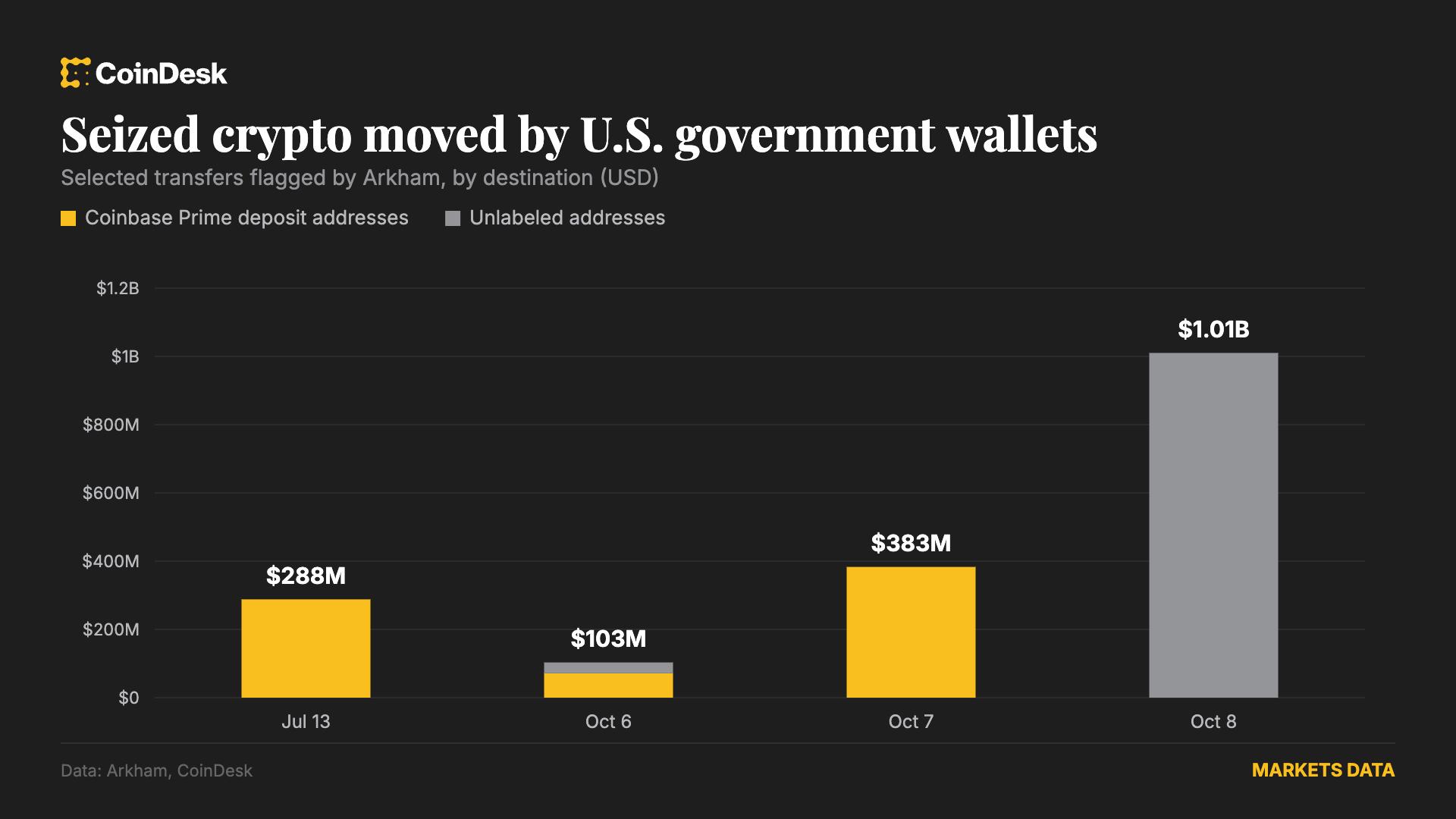
In March 2026, the U.S. Department of Justice announced that it had moved roughly $1 billion worth of Bitcoin from a wallet tied to the 2016 Bitfinex hack. The transfer was made to a government‑controlled address, but officials indicated that the coins would not be sold immediately. This example shows how a large seizure can be executed without disrupting the market price, as the assets remain locked in a secure wallet until a decision is reached.
What this means for you
If you earn Bitcoin through mining, cloud rewards, or staking, a seizure does not directly affect your holdings—unless the coins you receive are later identified as part of a compromised address. However, the broader takeaway is that all Bitcoin transactions are traceable on the public ledger. This transparency means that illicit activity is increasingly likely to be uncovered, and legitimate earners should keep clear records of where their coins come from.
For those using platforms that pool mining power or offer cloud‑based rewards, it’s especially important to choose services that implement strong compliance checks. Platforms that ignore regulatory requirements risk having their wallets frozen, which could interrupt reward payouts.
How to evaluate the safety of a crypto‑earning platform
- Know the custodial model: Does the platform hold the private keys itself, or does it use a non‑custodial approach where you retain control? Custodial services are more vulnerable to government orders.
- Compliance posture: Look for clear policies on anti‑money‑laundering (AML) and know‑your‑customer (KYC) procedures. Platforms that work with reputable financial institutions are less likely to be targeted for seizures.
- Auditability: Transparent reporting of where rewards are generated and how funds are moved helps you verify that earnings are legitimate.
- Security practices: Cold‑storage for large balances and multi‑signature wallets reduce the risk of hacks that could later lead to a seizure.
FAQ
Can a seized Bitcoin be recovered by its original owner?
Only if the owner can prove legitimate ownership in court and the authorities decide to return the funds. In most cases, seized assets are either auctioned or held as evidence.
Will a large seizure affect Bitcoin’s market price?
Not necessarily. If the coins are moved to a secure wallet and not sold, the market may not feel any impact. Price movements occur when the assets are actively traded on exchanges.
Do I need to worry about my mining rewards being seized?
Rewards are safe as long as you control the private keys to the address where they are sent. Using a personal, non‑custodial wallet minimizes the risk of external seizure.
What legal risks exist for platforms that don’t follow AML/KYC rules?
Regulators can issue injunctions that freeze the platform’s wallets, leading to loss of access to users’ funds and potential shutdown of the service.
This article references reporting from coindesk.com.





