
Are you curious about why Bitcoin’s price can swing dramatically and what the terms “futures,” “open interest,” and “put‑call skew” actually mean? This article breaks down the basics of crypto derivatives, explains how they are used for speculation and risk management, and shows you what to watch if you want to earn or protect your crypto holdings.
What crypto derivatives are and how they work
Derivatives are financial contracts whose value is derived from an underlying asset—in this case, a cryptocurrency such as Bitcoin or Ethereum. The most common types are futures and options. A futures contract obligates the buyer to purchase, or the seller to deliver, a set amount of the crypto at a predetermined price on a future date. No actual coins need to change hands when the contract is opened; instead, traders post margin (a security deposit) to cover potential losses.
Options give the holder the right, but not the obligation, to buy (a call) or sell (a put) the underlying crypto at a specific strike price before the contract expires. Because the holder can choose not to exercise the option, the most they can lose is the premium paid for the contract.
Both futures and options are traded on specialized platforms that provide high‑leverage, meaning a small amount of margin can control a much larger notional exposure. This amplifies both potential gains and potential losses, which is why many traders use derivatives to hedge (protect) existing positions or to speculate on price moves without owning the underlying coin.
Key metrics: open interest, long/short ratios, and put‑call skew
Open interest (OI) is the total number of outstanding contracts that have not been settled. A rising OI usually indicates that new money is entering the market, while a falling OI suggests that traders are closing positions. OI is reported in dollar terms (notional OI) to show the total value of those contracts.
The long/short ratio compares the number of contracts betting on price increases (longs) versus price decreases (shorts). A ratio above 50 % long means more traders expect the price to rise; below 50 % long indicates a bearish tilt.
Put‑call skew measures the relative pricing of puts versus calls for the same expiry. A higher skew (more puts priced above calls) shows that market participants are buying more downside protection, which often signals fear or anticipation of a price drop. Conversely, a low or negative skew suggests optimism.
Real‑world illustration
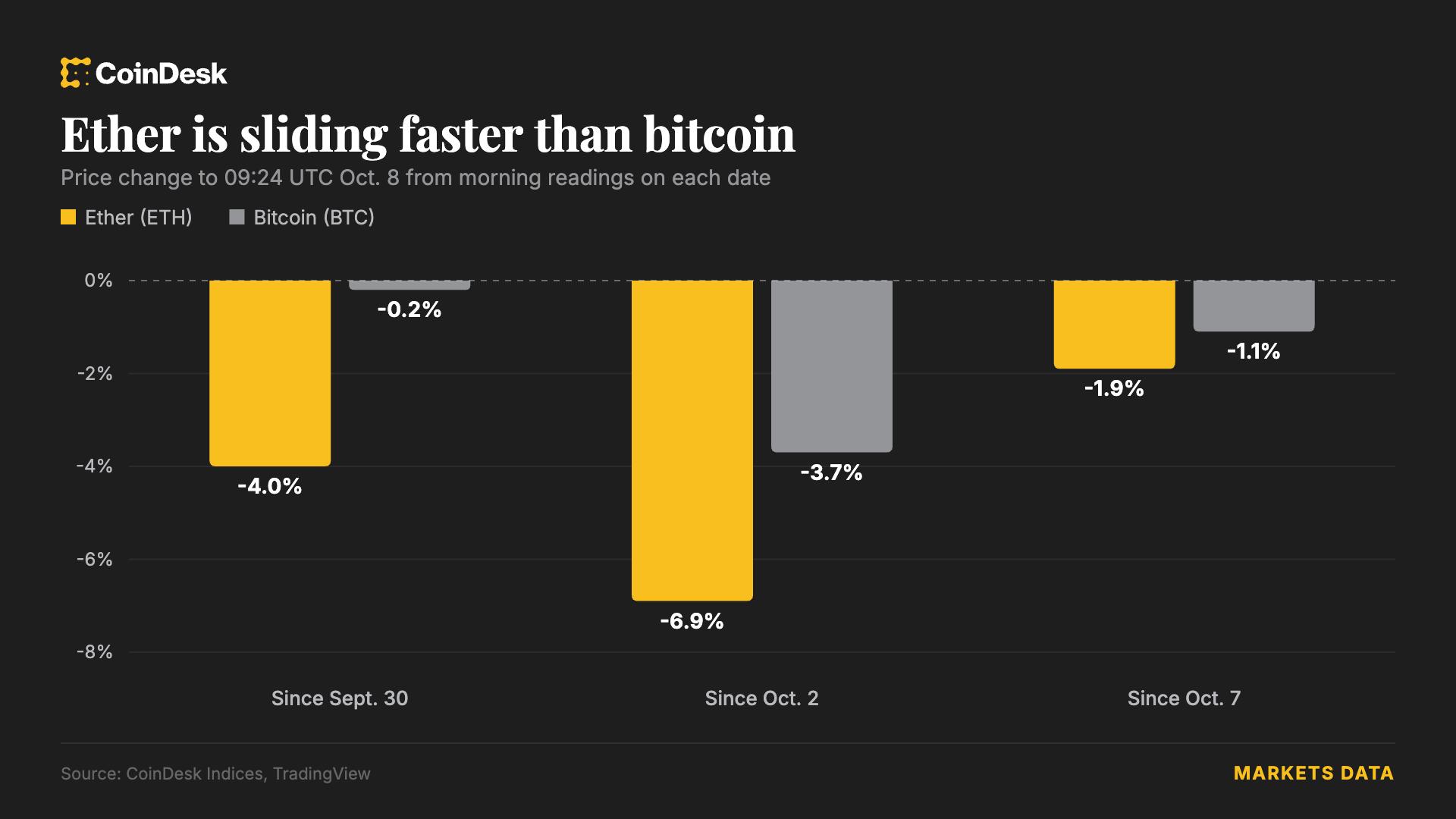
In early October 2026, Bitcoin slipped below $83,000 while a range of derivative metrics painted a mixed picture. The 24‑hour taker long/short ratio was 48 % long to 52 % short, indicating a slight bearish edge. Open interest across all crypto futures fell 1 % to about $150 billion, and liquidations dropped from $548 million to $400 million, showing that forced selling was easing.
Notably, the notional open interest for Bitcoin, Ethereum, and several altcoins fell in line with their spot price declines, suggesting that traders were de‑leveraging—closing positions rather than opening new ones. Meanwhile, the put‑call skew for Bitcoin’s one‑week options rose to 10 %, meaning traders were paying more for puts (downside protection) than calls, a shift from the previous neutral stance.
These data points illustrate how derivative markets can signal sentiment beyond what the price alone shows. While the spot market reflected a modest pullback, the derivatives market hinted at growing caution among participants.
What this means for you
If you are looking to earn passive income or protect existing crypto holdings, understanding derivatives can help you make more informed decisions. Futures allow you to gain exposure to price moves without buying the coin outright, which can be useful if you want to allocate capital elsewhere. Options let you hedge against downside risk—buying a put can limit losses if the market turns sharply.
However, leverage amplifies risk. A small adverse price move can wipe out your margin, leading to liquidation. Therefore, it is essential to assess your risk tolerance, set stop‑loss limits, and only allocate a portion of your portfolio to high‑leverage products.
What to check before trading crypto derivatives
- Platform reputation and security: Use exchanges that are regulated or have a strong track record of protecting user funds.
- Margin requirements: Know the initial and maintenance margin levels; higher leverage means tighter margin calls.
- Open interest trends: Rising OI can indicate fresh capital entering the market, while falling OI may signal exiting positions.
- Long/short ratio: A heavily skewed ratio can foreshadow a crowded trade that might reverse quickly.
- Put‑call skew: An increasing skew suggests growing demand for downside protection, which may precede a pullback.
- Funding rates (for perpetual futures): Positive rates mean longs pay shorts; negative rates mean shorts pay longs. This can affect your cost of holding a position.
FAQ
What is the difference between a futures contract and a perpetual swap?
A futures contract has a fixed expiry date, after which it settles. A perpetual swap has no expiry; instead, it uses regular funding payments to keep its price anchored to the spot market.
Can I lose more than my initial investment with futures?
Yes. Because futures are leveraged, a rapid adverse price move can exceed your margin, resulting in a margin call and a loss greater than the amount you initially posted.
Do I need to own the underlying crypto to trade options?
No. Options can be bought and sold without holding the underlying asset. However, if you plan to exercise a call option, you will need to acquire the crypto at the strike price.
How does put‑call skew affect my trading strategy?
A high put‑call skew indicates that many traders are buying protection, which can be a warning sign of potential downside. You might consider reducing exposure or adding hedges when the skew spikes.
This article references reporting from coindesk.com.





