Are you wondering why some crypto tokens feel safe to hold while others trigger regulatory warnings? This article explains the difference between digital commodities and securities, how the U.S. Securities and Exchange Commission (SEC) approaches each category, and what the distinction means for anyone looking to earn or invest in crypto assets.
What is a digital commodity and how does it differ from a security?
A digital commodity is a crypto token that functions primarily as a medium of exchange, a store of value, or a unit of account, much like gold or oil in traditional markets. Its value is derived from supply and demand rather than from any promise of profit tied to the efforts of a specific team or company. In contrast, a security is an investment contract that gives the holder a right to share in the profits, revenues, or other economic benefits generated by a project’s management. The classic legal test for a security in the United States is the Howey Test, which asks whether investors:
- Invest money,
- In a common enterprise,
- With an expectation of profits,
- Derived primarily from the efforts of others.
If all four elements are satisfied, the token is likely a security and must comply with SEC registration or exemption rules. If the token fails the test—because it is used mainly for transactions, as a utility, or as a store of value—it may be classified as a digital commodity.
How the SEC currently treats crypto assets
The SEC has long treated many crypto tokens as securities, especially during initial coin offerings (ICOs) where funds were raised with promises of future platform growth. Over time, the agency has recognized a separate “digital commodity” category, acknowledging that not every token fits the Howey definition. However, the agency’s proposed Regulation Crypto Assets framework, released in August 2026, stopped short of explicitly embedding the digital commodity classification into the rule text. Instead, the SEC offered “interpretive guidance” that suggested a distinction but left many details vague.
This ambiguity creates legal uncertainty for developers, investors, and service providers. Without a clear rule, market participants must guess which regulations apply to activities such as token sales, secondary‑market trading, or staking rewards. The uncertainty can increase compliance costs, discourage innovation, and expose users to enforcement risk.
Real‑world illustration: Industry groups ask for explicit wording
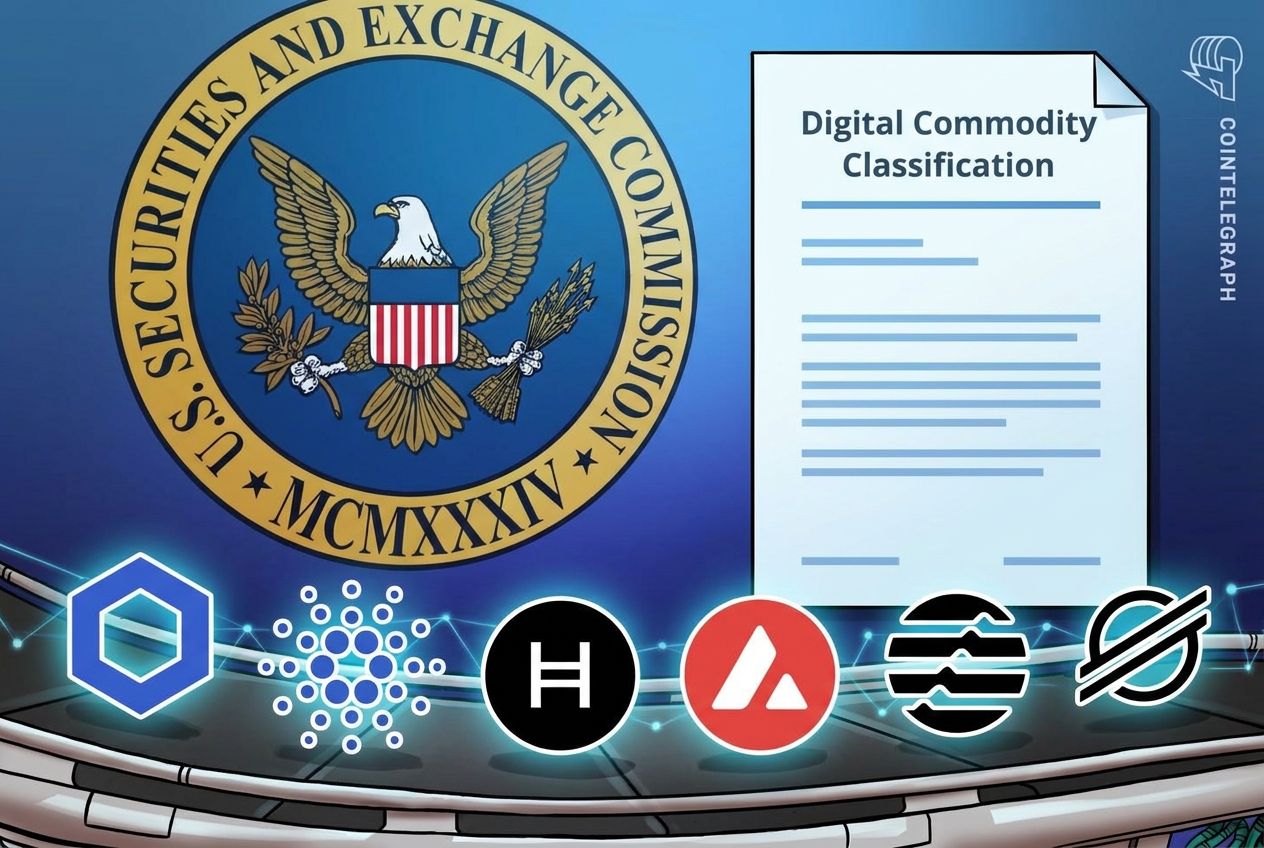
In a joint letter dated Oct. 20, 2026, six major blockchain organizations—including Chainlink Labs, the Cardano Foundation, Hedera, Aptos Labs, Ava Labs, and the Stellar Development Foundation—urged the SEC to incorporate the digital commodity classification directly into the proposed framework. The letter argued that merely referencing the category in guidance leaves developers unsure about which securities laws apply, especially for secondary‑market transactions and staking activities. By asking for explicit language, the groups hope to reduce the legal gray area that currently surrounds many crypto projects.
What this means for you as a crypto earner
If you earn crypto through mining, staking, or providing liquidity, the regulatory label of the token can affect how you report income and what protections you have. Tokens classified as securities may be subject to stricter anti‑money‑laundering (AML) and know‑your‑customer (KYC) requirements on exchanges, potentially limiting where you can sell or trade them. Digital commodities, on the other hand, are generally treated like commodities such as gold, meaning they can be traded on a broader range of platforms with fewer registration hurdles.
Moreover, the classification influences tax treatment. In the United States, the Internal Revenue Service (IRS) treats most crypto assets as property, but securities may trigger additional reporting obligations for capital gains and dividend‑like income. Understanding the regulatory status helps you choose platforms that align with your risk tolerance and compliance comfort.
How to assess a token’s regulatory status
- Check the issuer’s disclosures. Projects that consider their token a utility or commodity often state this explicitly in whitepapers or legal sections.
- Look for SEC filings. If a token has been registered or exempted as a security, the SEC’s EDGAR database will contain the relevant Form S‑1, S‑3, or Form D.
- Review the token’s economic model. Tokens that primarily grant voting rights, profit sharing, or staking rewards tied to network performance are more likely to be securities.
- Consult reputable legal analysis. Law firms and academic papers often publish “security vs. commodity” assessments for high‑profile projects.
- Consider the platform’s compliance posture. Exchanges that require extensive KYC for a token may be treating it as a security, whereas commodity‑focused platforms may have lighter onboarding.
FAQ
Is staking always considered a securities activity?
Not necessarily. If staking rewards are paid simply for helping secure the network and do not promise a share of the project’s profits, regulators may view them as a commodity‑related activity. However, if rewards are tied to the success of a specific company or its revenue, they could be treated as securities.
Can a token be re‑classified after it is launched?
Yes. Regulatory bodies can reassess a token’s classification if its use case or economic model changes. Projects that start as utilities but later introduce profit‑sharing mechanisms may find themselves re‑classified as securities.
Do I need a lawyer to determine a token’s status?
While a full legal opinion is advisable for large investments or business activities, most individual earners can rely on public disclosures, SEC filings, and reputable analysis to make an informed judgment.
What happens if I trade a token that is later deemed a security?
Past trades may become subject to retroactive reporting requirements, and platforms that facilitated the trades could face enforcement actions. Keeping records of transaction dates, amounts, and counterparties helps you comply if the classification changes.
This article references reporting from cointelegraph.com.