Ever wonder how a crypto exchange can promise that your balance is safe, even though it never holds every coin in a cold vault? This article explains what exchange reserves are, how they are used to back customer assets, and what a security breach means for ordinary users.
What are exchange reserves?
An exchange reserve is a pool of cryptocurrency that the platform keeps on hand to cover the balances it shows in its users’ accounts. When you deposit 1 ETH into an exchange, the exchange records that amount in its ledger and typically moves the actual token into a custodial wallet that it controls. The total of all such wallets is the exchange’s “reserve.”
Reserves can be stored in three main ways:
- Hot wallets – online wallets that are connected to the internet for quick withdrawals. They are convenient but more exposed to hacking.
- Cold wallets – offline storage devices or paper wallets that are not internet‑connected, offering stronger protection.
- Third‑party custodians – specialized security firms that hold the assets on the exchange’s behalf.
Because exchanges need to process trades instantly, they usually keep a portion of the total balance in hot wallets and store the rest in cold storage. The exact split varies by platform and by the type of asset.
How reserves are accounted for
Most reputable exchanges publish a “reserve proof” or “proof of reserves” report. This typically involves signing a cryptographic hash of the wallet addresses and balances with the private keys of the wallets, allowing anyone to verify that the listed addresses hold the claimed amount without revealing the private keys themselves.
These reports are meant to increase transparency and give users confidence that the exchange actually holds enough of each coin to cover all user balances. However, the reports only cover the wallets that the exchange chooses to disclose. If a wallet is omitted, its contents are not part of the public proof.
Real‑world example: Binance hack
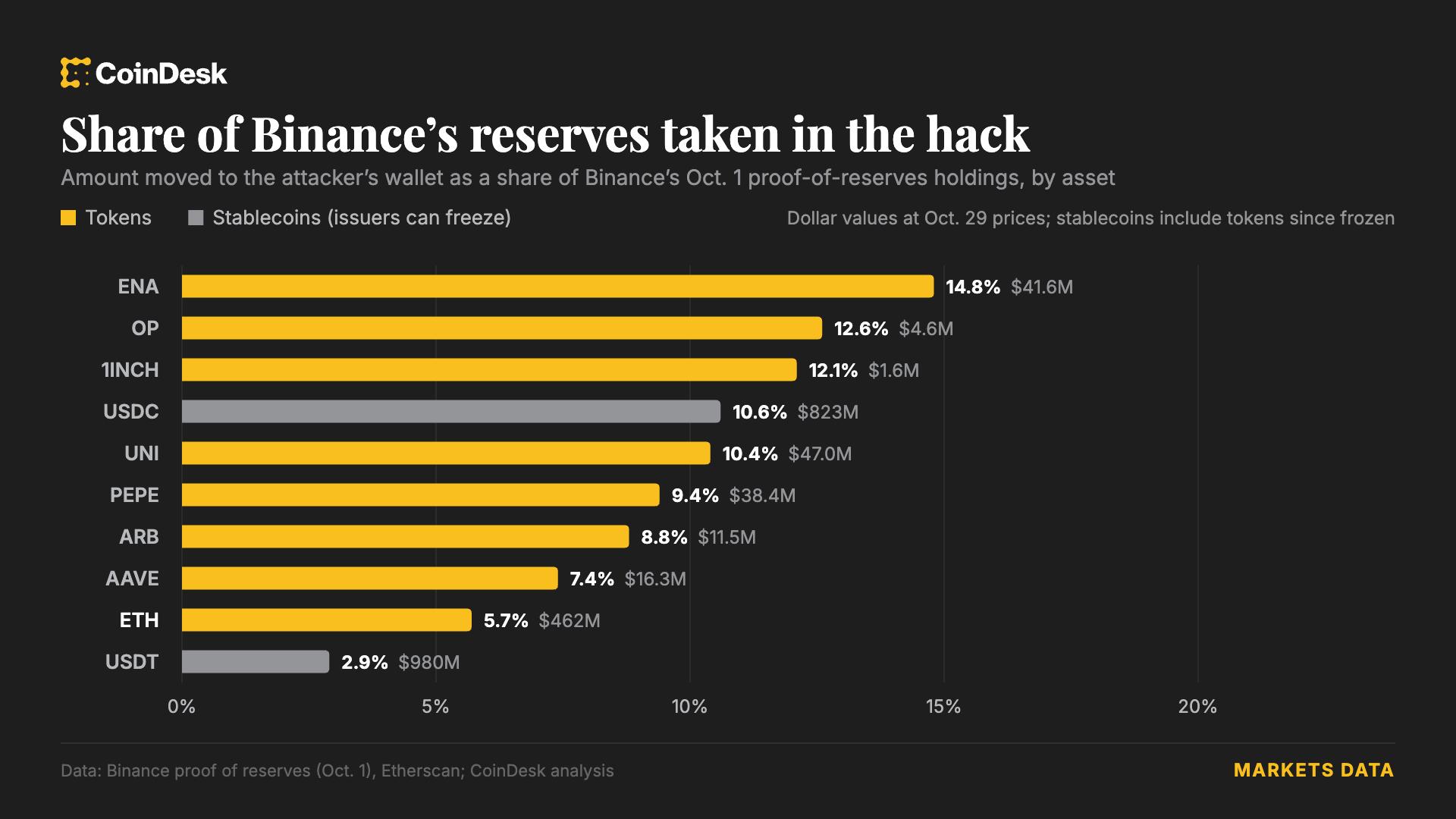
In March 2026, Binance’s own reserve data listed several wallets as backing customer balances. A security breach drained those wallets, creating an estimated 6 % shortfall in the exchange’s ether (ETH) reserve. Binance announced that it would replace the stolen funds, but the incident highlighted how a hack of reserve wallets can directly affect the backing of user assets.
What this means for you
If an exchange’s reserve is compromised, the immediate risk is that the platform may not have enough of the affected asset to cover all user balances. In the Binance case, the shortfall was relatively small (about 6 %), but larger breaches could lead to delayed withdrawals, reduced confidence, or, in worst‑case scenarios, insolvency.
For everyday earners and traders, the key takeaways are:
- Even large, well‑known exchanges are not immune to hacks.
- Reserves are a mix of hot and cold storage; the hot portion is more vulnerable.
- Proof‑of‑reserve reports can give you a snapshot of an exchange’s backing, but they are not a guarantee against future attacks.
What to check before trusting an exchange
- Proof‑of‑reserves frequency – Look for platforms that publish regular, verifiable reports (monthly or quarterly).
- Cold‑storage ratio – Exchanges that keep a larger percentage of assets offline reduce the attack surface.
- Insurance or compensation fund – Some platforms maintain a fund to cover losses from hacks; understand its scope and limits.
- Security audits – Independent audits of the exchange’s smart contracts and custodial infrastructure add an extra layer of confidence.
- Withdrawal limits – Tight limits on large, sudden withdrawals can indicate a cautious approach to risk management.
FAQ
How can I verify an exchange’s reserve?
Check the exchange’s website for a proof‑of‑reserves link. The report should include signed messages that you can verify using a blockchain explorer. If the exchange does not publish any proof, treat that as a red flag.
What’s the difference between hot and cold wallets?
Hot wallets are online and enable instant transactions, but they are more exposed to hacking. Cold wallets are offline, making them far less vulnerable, but they require extra steps to move funds for withdrawals.
If an exchange is hacked, will I lose my funds?
Loss is possible, especially if the exchange does not have insurance or a compensation mechanism. In many cases, exchanges work to reimburse affected users, but the process can be slow and may not cover the full amount.
Should I keep all my crypto on an exchange?
For long‑term holding, it is safer to store assets in a personal wallet where you control the private keys. Use exchanges mainly for trading or converting assets, and move only the amount you need for those activities.
This article references reporting from coindesk.com.