Do you wonder why the price of Bitcoin can move so dramatically even when there’s no obvious news? One key driver is the funding rate on perpetual futures contracts. This article explains what funding rates are, how they work, and what they tell you about market sentiment and leverage.
What a Funding Rate Is and How It Works
A perpetual futures contract is a derivative that lets traders speculate on the price of an asset—like Bitcoin—without ever owning it. Unlike traditional futures, perpetual contracts have no expiry date. To keep the contract price tethered to the underlying spot price, exchanges use a mechanism called the funding rate.
The funding rate is a periodic payment exchanged between long (buyers) and short (sellers) positions. If the contract trades above the spot price, the rate is positive and longs pay shorts. If it trades below spot, the rate is negative and shorts pay longs. The rate is calculated every few hours (often every eight hours) based on two components: the difference between the perpetual price and the spot price, and an interest component that reflects the cost of capital.
Because the payment is settled in the underlying asset (usually Bitcoin), it creates a financial incentive for traders to push the contract price back toward the spot market. When many traders are bullish and open long positions, the funding rate tends to rise, sometimes reaching double‑digit percentages on an annualized basis. Conversely, a bearish crowd drives the rate negative.
Why Funding Rates Matter for Traders and Earners
Funding rates serve as a real‑time barometer of market sentiment. A high positive rate indicates that more participants are betting the price will go up, and they are willing to pay a premium to hold those positions. This often coincides with increasing leverage, as traders borrow funds to amplify their exposure.
For someone looking to earn passive income through crypto, funding rates can be a source of yield. Traders who hold short positions when the rate is positive receive regular payments from longs. However, this strategy carries risk: if the market reverses, the short position can incur large losses that outweigh the funding income.
Real‑World Illustration
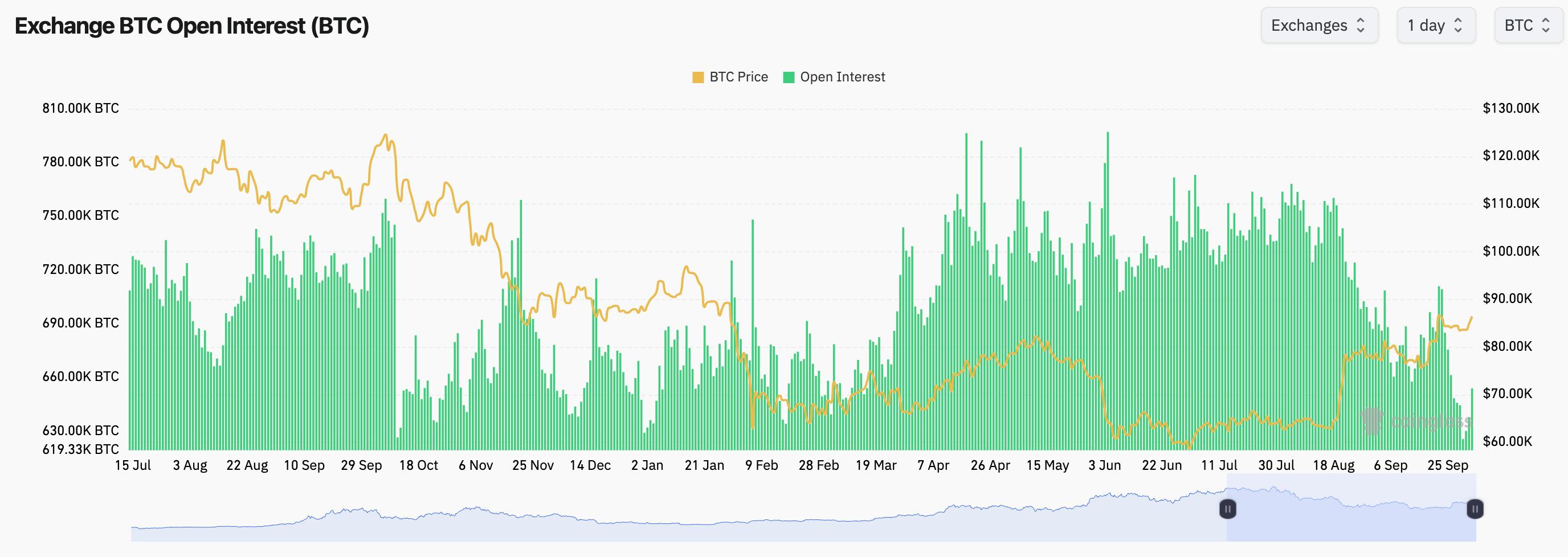
In March 2026, Bitcoin crossed the $86,500 mark and perpetual funding rates on major exchanges began climbing sharply. Analysts noted that the rising rates signaled “growing bullish leverage,” meaning more traders were opening leveraged long positions and were willing to pay higher funding fees to stay in the market. This example shows how a price milestone can trigger a feedback loop between spot price, funding rates, and trader behavior.
What It Means for You
If you are considering earning through crypto derivatives, understanding funding rates helps you gauge the risk‑reward balance. A soaring positive rate suggests a crowded long side; entering a short position could earn you funding payments, but you must be prepared for potential price spikes that could wipe out your capital.
Conversely, a negative rate indicates a dominant short side. Long traders receiving funding payments may find a modest income stream, yet they also face the danger of a rapid price decline that could trigger margin calls.
In both cases, funding rates are a dynamic cost of holding a position, and they should be factored into any profitability calculation, just like transaction fees or interest on borrowed capital.
How to Evaluate Funding Rates Before You Trade
- Check the current rate and its trend. A sudden jump may signal a shift in market sentiment.
- Compare rates across exchanges. Different platforms calculate rates slightly differently; arbitrage opportunities can arise.
- Assess the leverage level. High leverage amplifies both gains and losses, making funding payments a smaller portion of overall risk.
- Consider the underlying spot price. If the perpetual price is far above spot, the funding cost may be unsustainable.
- Review your margin and liquidation thresholds. Ensure you have enough collateral to survive adverse price moves.
FAQ
What happens if I hold a position when the funding rate changes?
The funding payment is settled at the end of each funding interval. If the rate flips from positive to negative, you will start receiving payments instead of paying them, or vice versa.
Can I earn a steady income just by collecting funding payments?
Funding income can be a component of a broader strategy, but it is not reliable on its own. Market moves can quickly erase the small gains from funding, especially if you are highly leveraged.
Do all perpetual contracts use the same funding formula?
Most exchanges use a similar approach, but the exact calculation (e.g., the time interval, the interest component) can vary. Always read the exchange’s documentation.
Is a high funding rate always a sign of a bullish market?
Usually, a high positive rate reflects bullish sentiment, but it can also indicate an over‑extended market that may be vulnerable to a correction. Use it alongside other indicators.
This article references reporting from coindesk.com.