Ever wondered why a sudden price move can wipe out millions of dollars in traders’ accounts? This article explains how leveraged trading and liquidations operate in the crypto market, and what you should consider before using borrowed funds to earn online.
The plain explanation
Most crypto exchanges let users trade with leverage, which means borrowing money to increase the size of a position. If you think Bitcoin will rise, you might open a long position with 5× leverage: for every $1 of your own capital, the exchange lends you $4. Conversely, if you expect a drop, you can open a short position, borrowing the asset to sell now and hoping to buy it back cheaper later.
Leverage amplifies both potential profit and potential loss. To protect themselves, exchanges set a maintenance margin—the minimum equity you must keep in your account. When the market moves against your position and your equity falls below this threshold, the exchange automatically closes (or liquidates) the position. This prevents the trader from owing more than they have deposited.
Liquidations happen in two main ways:
- Partial liquidation: The exchange sells enough of the position to bring the account back above the maintenance margin, leaving the trader with a smaller, still‑open position.
- Full liquidation: The entire position is closed, locking in the loss.
Because many traders use similar leverage levels, a rapid price swing can trigger a cascade of liquidations. When many positions are closed at once, the market can experience additional price pressure, sometimes creating a feedback loop.
A real example
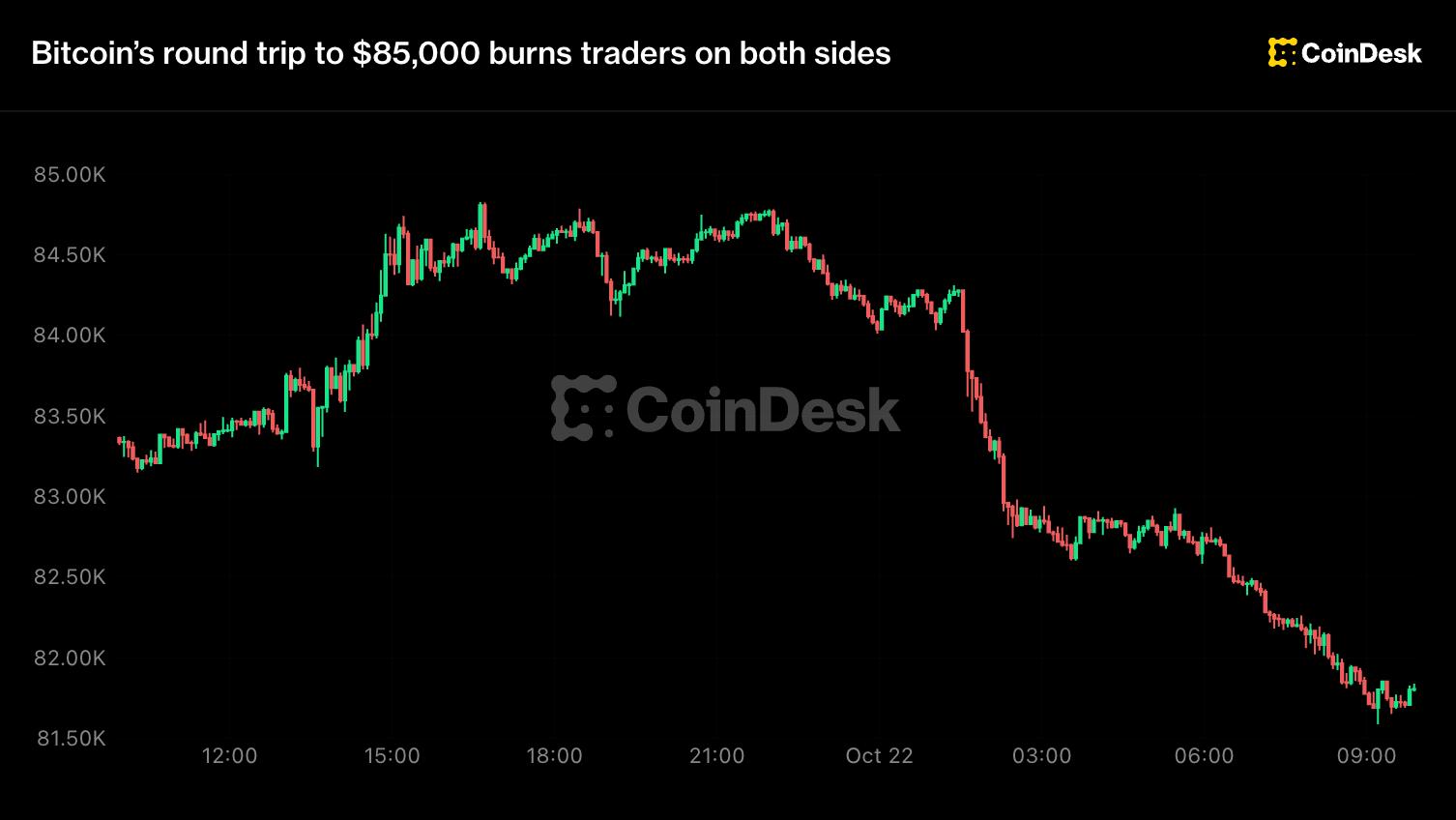
In March 2026, Bitcoin surged toward $85,000 before retreating to around $81,800 within a single day. During that 24‑hour window, roughly $431 million in leveraged positions were liquidated, according to market data. Of that amount, $173 million came from short sellers who were forced out as the price climbed, while $210 million of bullish bets were wiped out on the way down. The largest single liquidation was an $11.8 million long position on Binance, closed near $83,500.
What it means for you
If you are looking to earn passive income through crypto trading, understanding liquidations is essential. Leveraged trading can boost returns, but it also raises the risk of losing your entire deposit in a single adverse move. The example above shows that even experienced traders on major exchanges can be caught off‑guard by swift price changes.
For most small‑scale earners, the safest approach is to avoid high leverage altogether. Instead, consider strategies that rely on your own capital, such as staking, cloud mining rewards, or low‑risk arbitrage. If you do choose leverage, keep the position size small relative to your total portfolio and be prepared for the possibility of a total loss.
What to check / how to judge
- Leverage level: Lower leverage (e.g., 2× or 3×) reduces liquidation risk. Higher ratios increase both upside and downside dramatically.
- Maintenance margin: Know the exact percentage your exchange requires. Some platforms set it at 20 % of the position value, others higher.
- Liquidity of the asset: Highly liquid coins like Bitcoin and Ether can be liquidated quickly without huge slippage. Less liquid tokens may experience larger price gaps when liquidated.
- Exchange reputation: Choose platforms with transparent liquidation engines and clear margin policies. Look for public audits or community reviews.
- Risk management tools: Use stop‑loss orders, take‑profit limits, and alerts to exit a position before it reaches the liquidation threshold.
FAQ
What is the difference between a margin call and a liquidation?
A margin call is a warning that your equity is approaching the maintenance margin, giving you a chance to add funds or reduce the position. A liquidation occurs when the exchange automatically closes the position because the margin call was not met.
Can I recover funds after a liquidation?
No. Once a position is fully liquidated, the loss is realized and the remaining equity (if any) stays in your account. You cannot retrieve the borrowed amount; the exchange has already settled the debt.
Do all exchanges handle liquidations the same way?
Not exactly. Some use a “partial liquidation” model, selling only enough to restore margin, while others close the entire position. The speed and price at which liquidations occur can also vary based on the exchange’s order‑book depth.
Is leveraged trading suitable for earning passive income?
Generally, no. Leveraged trading requires active monitoring and carries a high risk of loss, which conflicts with the idea of passive earnings. For passive income, consider staking, cloud rewards, or mining pools that generate returns without constant market exposure.
This article references reporting from coindesk.com.