Are you wondering why the price of Bitcoin and other tokens can swing dramatically from one day to the next, and what those swings mean for your online earnings? This article explains the forces that drive crypto market volatility, how they differ from traditional markets, and what you should consider when you’re trying to earn passive income through mining, staking, or cloud rewards.
What market volatility actually is
Volatility is a statistical measure of how much the price of an asset moves over a given period. In crypto, it is usually expressed as a percentage change in price over 24 hours, a week, or a month. A highly volatile asset can gain or lose double‑digit percentages in a single day, while a low‑volatility asset moves only a few percent.
Two key concepts help you understand volatility:
- Price swing: The raw change in price, such as Bitcoin falling from $84,500 to $81,800.
- Volume: The total amount of the asset that changes hands during the period. Higher volume often confirms that a price move reflects broader market sentiment rather than a few large trades.
Crypto markets differ from traditional markets in three main ways:
- 24/7 trading: Prices never stop moving, so news can affect sentiment at any hour.
- Lower liquidity: Compared with large‑cap stocks, many crypto assets have fewer buyers and sellers, which amplifies price swings.
- Broader driver set: Besides earnings and macro‑economic data, crypto reacts to protocol upgrades, regulatory announcements, and even social‑media trends.
Why prices move: the main drivers
Macro‑economic news. Global events—such as central‑bank policy changes, inflation data, or major corporate earnings—can shift risk appetite. When investors become risk‑averse, they may pull money out of crypto, causing prices to dip.
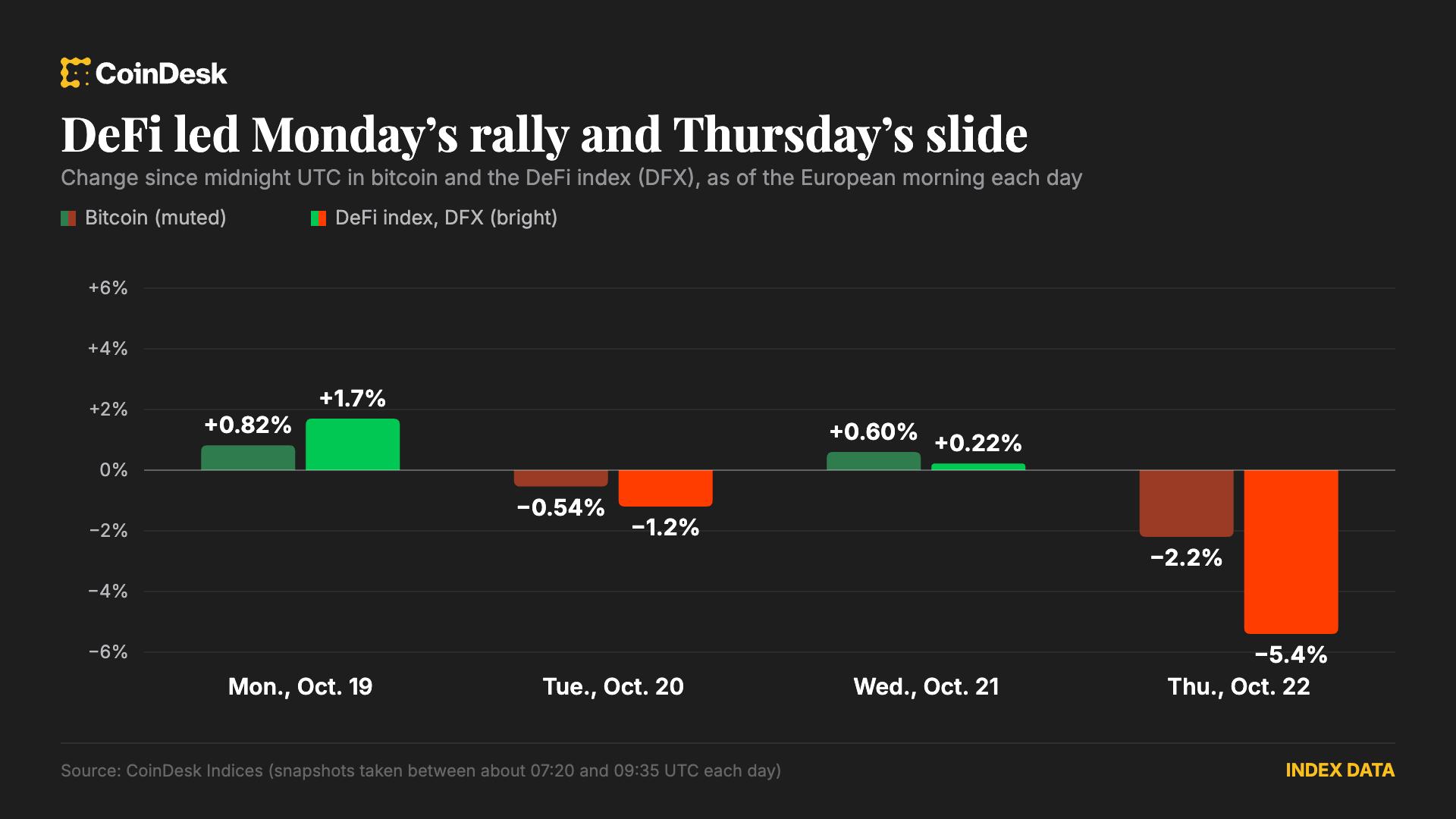
Sector‑specific sentiment. In crypto, whole categories (e.g., DeFi, NFTs, layer‑1 blockchains) can rise or fall together. If a leading DeFi protocol announces a security issue, the entire DeFi index may slide, dragging down related tokens.
Funding and derivatives activity. Futures, perpetual swaps, and options let traders bet on future price direction. Funding rates (the periodic payment between long and short positions) indicate whether the market is crowded on one side. A sudden surge in funding can foreshadow a rapid price correction.
Protocol upgrades and technical events. Software upgrades (hard forks, network upgrades) can create optimism or anxiety. When a major upgrade goes live, traders may anticipate higher utility and price appreciation, or they may fear bugs that could hurt the network.
Real‑world illustration
In March 2026, Bitcoin slipped below $82,000, dropping about 2.7% from its overnight high near $84,800. The decline coincided with mixed earnings reports from Tesla and Meta, which revived doubts about continued AI spending. Those doubts weighed on equity markets worldwide, pulling down Nasdaq 100 futures by 1.32% and causing Asian indices such as Hong Kong’s Hang Seng to fall more than 3%.
At the same time, the CoinDesk DeFi index fell 5.6%, and the broader crypto market saw a shift in derivatives positioning: open interest in crypto futures fell 2.46% while total derivative trading volume rose 19%. Funding rates stayed only slightly positive, indicating that neither longs nor shorts were heavily crowded. This mix of macro‑economic pressure, sector‑specific weakness, and modest derivatives activity helped explain why Bitcoin and many altcoins moved lower on that day.
What the volatility means for you
If you earn crypto through mining, staking, or cloud‑reward platforms, price swings affect two parts of your return: the amount of token you receive and the fiat value of those tokens.
- Reward quantity: Most mining and staking protocols issue a fixed number of tokens per block or per epoch, regardless of price. Your token earnings stay the same, but their dollar value can fluctuate dramatically.
- Opportunity cost: When prices fall, you could sell a portion of your rewards to cover operational costs (electricity, hardware leasing, platform fees) without sacrificing long‑term holdings.
- Re‑investment timing: High volatility can create buying opportunities. If you plan to increase your staking amount, a dip may let you acquire more tokens at a lower price, boosting future passive income.
However, volatility also introduces risk. Rapid price drops can erode the value of your accrued rewards faster than you can sell them, especially if you rely on a single platform that locks tokens for a period (e.g., a 30‑day staking cooldown). Diversifying across several earning methods—such as combining mining with a reputable cloud‑reward service like EcoPool—can help smooth out earnings.
How to evaluate volatility before you commit
When assessing a crypto‑earning opportunity, consider these concrete checks:
- Historical price stability: Look at the asset’s 30‑day and 90‑day price charts. A token that has moved less than 10% in a month is less risky than one that swings 30% or more.
- Liquidity depth: Check the average daily trading volume on major exchanges. Higher volume means you can sell rewards without moving the market price too much.
- Derivatives signals: Review open interest and funding rates for the token’s futures. A large, sustained positive funding rate suggests many traders are paying a premium to stay long, which could precede a correction.
- Protocol health: Verify that the underlying blockchain has active development, a solid validator set, and transparent governance. Upgrades that improve efficiency (e.g., Solana’s Alpenglow upgrade) can be positive, but untested changes may increase risk.
- Platform reputation: For cloud‑reward services, read independent audits, check user reviews, and confirm that the platform does not lock your tokens indefinitely.
FAQ
Why does Bitcoin sometimes drop even when there is no bad news for the crypto sector?
Bitcoin is often treated as a “risk‑on” asset. When broader financial markets experience stress—such as a slowdown in AI spending or a rise in inflation—investors may sell Bitcoin alongside stocks and bonds, causing a price decline even if the crypto ecosystem itself has no new negative information.
Can I protect my earnings from price swings?
One common method is to hedge a portion of your holdings with stablecoins or fiat‑denominated assets. Some platforms also let you sell a fraction of your rewards daily to cover costs, keeping the remainder invested for long‑term growth.
Do high funding rates always mean a market is about to crash?
Not necessarily. A high funding rate indicates that longs are paying shorts to maintain their positions, which can signal crowding on the upside. If the price stops rising, those longs may be forced to unwind, leading to a correction. However, funding rates must be evaluated alongside other signals such as volume, open interest, and overall market sentiment.
Is it better to earn from mining or staking in a volatile market?
Both methods generate a fixed token amount, but staking usually offers lower operational risk because you don’t need hardware or electricity. Mining can be more profitable when token prices are high, but it also incurs higher variable costs that can erode earnings during price dips. Diversifying between the two can balance risk and reward.
This article references reporting from coindesk.com.